What is changing in public safety—and why it matters.
Credible Messages translates consequential news, funding, reports, events, and openings into what matters and why. Every message points you back to the original source.
Featured Credible Message
What matters now.
Featured messages are selected by ICM Studio and remain part of the live feed.
Funding Opportunity
funding
October 12, 2026
Denver Offers $2.8 Million for Community-Led Youth Safety—Apply by October 16
Denver’s Community-Led Safety Grant Program will support community-based organizations serving youth ages 10–24 at greatest risk of violence or already affected by it, particularly gun violence. The city anticipates 9–15 awards of $100,000–$300,000. Applications are due October 16, 2026, at noon Mountain Time. Anticipated contracts run March 15, 2027, through December 31, 2028.
Why it matters
Organizations closest to young people need resources to turn trusted relationships into consistent support. This opportunity funds new or expanded safety programming and violence interruption efforts. If your organization serves this population, review the application requirements now and make sure your proposal connects the people you reach, the work you deliver, and the results you will track.
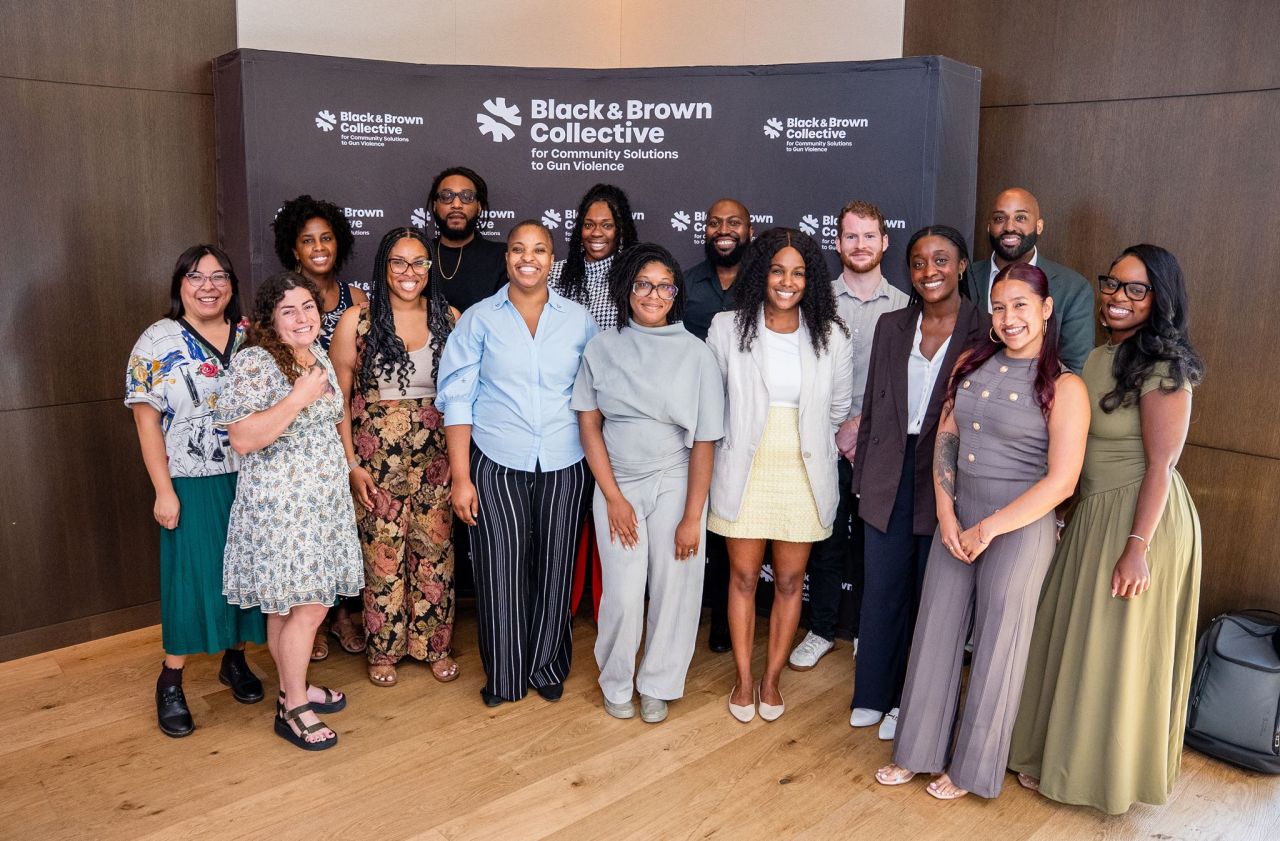
Black & Brown Collective Invests More Than $725,000 in 16 Violence Research Projects
The Black & Brown Collective is supporting 16 projects through its 2026 research funding round on structural violence, community violence, and health equity. Projects examine topics including credible messengers, community-led reentry, rural firearm violence, youth investment, and survivors’ experiences. The announcement identifies investigators and describes each project.
Why it matters
Who helps shape the research affects which questions get asked and whose experience becomes evidence. These projects bring community knowledge into studies of the conditions that shape safety, harm, and healing. The investment creates room for better questions and more relevant evidence. Results will need to be assessed as the research develops.
What It Takes to Have a Friday Night Without Violence
The Trace reporter Chip Brownlee reports on Memphis organizations and city-county partners connecting young people and families to violence intervention, employment, services, and safe events. The story also describes unstable funding, staffing pressures, worker safety concerns, and tensions around referrals connected to police information.
Why it matters
This is a useful look at the relationships and resources behind a local safety ecosystem. Partnerships and referrals can extend an organization’s reach, but they cannot make up for unstable funding, limited staff support, or lost community trust. Treat this as reported experience, not proof of which programs reduce violence. Use it to examine whether referrals lead to support, whether providers have reliable resources, and how their independence is protected.
Webinar Explores Safety, Structural Inequities, and Violence
Scholars examine how structural inequities shape violence, support access, and safety across public and private spaces. Facilitated by Dr. Rebecca Atkinson, the panel features presentations from researchers including Dr. Kamila Alexander and Dr. Franklin Cosey-Gay discussing intimate partner violence, historical disinvestment, and hospital-based intervention programs.
Why it matters
This event offers researchers and community leaders a structured discussion on how structural factors influence safety and violence. By examining these dynamics, participants can better understand the complexities of institutional stigma and community-level interventions. Register online to join the upcoming panel discussion.
Pennsylvania's Bipartisan Targeted Public Safety Investments and Strategy Are Driving Down Violent Crime
Pennsylvania's latest bipartisan budget allocates targeted funding across community violence prevention, victim services, police staffing, and investigative technology to address public safety. Officials report state-level decreases in violent crime and homicides since 2023 alongside these investments.
Why it matters
This strategy demonstrates how a state government deploys specific fiscal resources to balance community prevention with law enforcement accountability. Public-safety decision-makers can examine how dedicated funding for investigative clearance rates and rural department technology operationalizes a dual approach to crime reduction.
The Trace publishes reporting on Memphis youth violence intervention
The Trace offers reporting by Chip Brownlee detailing how Memphis organizations and city-county partners connect young people and families to violence intervention, employment, services, and safe events. The coverage also addresses operational hurdles, including unstable funding, staffing pressures, worker safety concerns, and complex referral dynamics tied to police information.
Why it matters
This reporting highlights the practical operational hurdles facing local violence intervention groups trying to support families and young people. Understanding these resource constraints and structural tensions helps community partners and stakeholders assess the real-world conditions of local service delivery. Review the full reporting on their site to examine the detailed findings.
New CDC data clarify that firearm harm requires different prevention systems
CDC’s October 1, 2026 MMWR report summarizes National Violent Death Reporting System (NVDRS) data for 2023. It records 72,093 deaths in the 50 states and the District of Columbia; Puerto Rico’s 730 deaths are analyzed separately. Suicide accounted for 62.4% of recorded deaths and homicide for 28.5%. Firearms were the method in 54.5% of suicides and 77.8% of homicides.
The patterns differed. Black males had the highest homicide rate (50.6 per 100,000). Suicide rates were highest among American Indian or Alaska Native (AI/AN) males (34.3 per 100,000), followed by White males (29.9). For female homicides where the victim–suspect relationship was known, 53.4% of suspects were current or former intimate partners. Separately, intimate-partner violence was identified as a circumstance in 16.5% of homicides with known circumstances. Unintentional firearm deaths most often involved males, White people, and people ages 15–19; when circumstances were known, they most often occurred while someone was playing with a firearm and followed an unintended trigger pull.
Evidence boundary: These are descriptive surveillance findings about 2023, not causal estimates or current rates. Forty-seven states had statewide NVDRS data; California, Florida, and Texas supplied detailed records from selected counties, while Puerto Rico was analyzed separately. Verify Colorado and local data before applying national demographic patterns locally. The report does not evaluate which prevention strategy is effective.
Why it matters
A shared weapon does not create one shared prevention problem. These data point to different pathways and different operating needs: community violence calls for focused outreach and place-based intervention; suicide prevention calls for health-system detection, crisis response, and temporary separation from lethal means; intimate-partner violence requires victim safety and reliable firearm relinquishment; and unintentional injury calls for safe storage and changes in household behavior.
For ICM, the organizing point is clear: the same weapon can produce different harms that require different systems. Leaders should align partner roles, resources, and accountability to the pathway of harm. That is an operational implication drawn from the surveillance pattern; the report itself does not test these interventions.
Represent Justice Seeks Ambassador Program Impact Manager
Represent Justice is hiring a fully remote Ambassador Program Impact Manager with an annual salary range of $82,000 to $98,000 and optional co-working access in Chicago, Los Angeles, and Atlanta. The role focuses on building narrative power with system-impacted storytellers to mobilize audiences and transform the legal system. Co-working spaces are also available in select cities for staff members.
Why it matters
This position offers professionals a direct opportunity to support criminal justice reform by managing narrative strategies and uplifting system-impacted voices. Understanding the role's scope and compensation helps qualified candidates evaluate career fit within legal reform organizations. Review the complete job listing details and submit your application through the provided portal to be considered.
Council on Criminal Justice Assessment Examines Factors Behind Historic Homicide Decline
During a two-day summit, nearly four dozen crime researchers assessed close to 50 potential factors driving the historic decline in United States homicides between 2022 and 2026. The Council on Criminal Justice report evaluated broad explanations for the sharp drop, which followed a steep rise in 2020 and reached the lowest level since at least 1900. Expanded community violence intervention emerged among the small group of factors receiving the broadest participant agreement.
Why it matters
Public safety operates as a complex system requiring clear operational capacity and sustained infrastructure rather than a reliance on single interventions. While the assessment points to expanded community violence strategies and hospital-based programs, tracking these gains demands rigorous evidence and stable institutional support. Sustainable progress relies on understanding how funding, local ownership, and coordination actually function on the ground to prevent retaliation and maintain long-term safety conditions.
Host a virtual pilot of the Injury-Free Academy with $40,000
The Safe States Alliance and the University of North Carolina Injury Prevention Research Center offer a single award of up to $40,000 to host an eight-month virtual pilot of the Injury-Free Academy. Selected organizations will recruit local multidisciplinary teams and implement a curriculum focused on shared risk and protective factors for injury and violence prevention. Applications are due by December 11, 2026.
Why it matters
This funding supports public health entities in building local capacity for upstream violence and injury prevention by aligning multisector teams around shared risk factors. Organizations working in this field can use the grant to coordinate subject matter experts and test a pre-designed prevention curriculum. Review the request for proposals to check eligibility criteria and prepare required submission documents before the December deadline.
North Carolina’s $4.5 million safety package puts coordination to the test
On October 7, 2026, the U.S. Attorney’s Office for the Eastern District of North Carolina announced more than $4.5 million in grants across eight recipients. The listed awards include $295,000 for Raleigh Boots on the Ground; $106,581 for the NC Coalition Against Domestic Violence; $236,484 for the NC Coalition Against Sexual Assault; $259,000 to Wendell; $606,000 to Ahoskie; $682,553 to Onslow County; $994,593 to Cumberland County; and $1,320,496 to the North Carolina State Bureau of Investigation. DOJ says the overall package supports community and hospital-based violence intervention, services addressing domestic and sexual assault, and law-enforcement capabilities such as mobile command, robotic vehicles, cameras, patrol vehicles, and protective equipment. The release does not tie each equipment purchase to a specific award.
Evidence boundary: The announcement describes awards and intended uses but provides no impact results. It does not establish whether recipients share a problem analysis, target population, referral process, governance structure, or outcome measures.
Why it matters
The portfolio places community violence intervention, domestic- and sexual-violence services, and enforcement funding in one public-safety package. That is a useful starting point for balanced investment. The announcement doesn't speak to how efforts will be coordinated or how/if impact will be evaluated. Just as importantly, which population(s) will be prioritized for intervention services.
ICM would recommend Raleigh-oriented planning, examining award period, service model, and measures—and how its work coordinates with Raleigh and Wake County agencies, hospitals, and other violence-intervention providers, resources, and data.
NBA Foundation Youth Workforce Grant Applications Close October 31
The NBA Foundation’s fall funding cycle supports nonprofits helping under-resourced youth ages 14–24 move from school into employment. Supported work includes job readiness, skills training, job placement, and career advancement in NBA team markets. Applications are open through October 31.
Why it matters
A credible path to employment gives young people more options for their future. For organizations already doing this work, this funding window deserves a close look. Check the Foundation’s eligibility and market requirements, then gather your Form 990, current organizational budget, project budget, and board list before completing the application in FLUXX.
Following a steep rise in 2020, the U.S. homicide rate fell sharply between 2022 and 2026, reaching its lowest level in decades. To examine the causes, the Council on Criminal Justice convened dozens of crime scholars to assess nearly fifty potential factors. Expanded Community Violence Intervention emerged among the strategies receiving the broadest agreement from participating experts as a leading potential contributor to the drop.
Why it matters
Public safety improvements are frequently reduced to simple political talking points, but systemic progress requires disciplined evaluation of complex variables. When nearly four dozen researchers spend two days examining fifty distinct explanations for a historic national drop in homicides, it shows that safety relies on a web of conditions rather than a single silver bullet. Pinpointing localized interventions like Community Violence Intervention helps decision-makers understand where targeted investments and operational capacity actually intersect with street-level risk. True system accountability means funding the infrastructure that reaches the people most exposed to violence, while maintaining rigorous honesty about what the data can and cannot prove.
Roanoke City Council Accepts Nearly $3 Million for Community Violence Prevention
The Roanoke City Council formally accepted and appropriated a $2,951,158 Safer Communities grant from the Virginia Department of Criminal Justice Services. Roanoke is one of nine Virginia cities selected for the funding, which builds on initial support received in 2025. The grant resources holistic, community-based strategies addressing root causes of violence, including youth and family resource connections, neighborhood well-being initiatives, police department community outreach, the Gun Lock Ambassadors program, and the Teen Apprenticeship program.
Why it matters
External grant funding represents a critical test of municipal operational capacity and long-term sustainability. While securing nearly three million dollars enables cities to expand non-enforcement prevention infrastructure, the real challenge lies in how local authorities manage handoffs, coordinate intergovernmental funding streams, and maintain accountability once initial awards taper off. State-funded violence prevention is only as effective as the local systems designed to absorb, deploy, and institutionalize those resources over time. Tracking these funding flows provides practical insight into how municipal agencies operationalize root-cause strategies alongside traditional public safety efforts.
Advance Peace published a monograph detailing the behavioral science framework supporting its Peacemaker Fellowship and LifeMAP Milestone Allowances. Authored by founder DeVone Boggan, the document explains how financial incentives operate as positive reinforcement and tools to alleviate cognitive scarcity. The report outlines human development strategies and presents internal programmatic statistics regarding participant retention and city-level homicide trends, framing the intervention as a comprehensive approach to supporting individuals at the center of gun violence.
Why it matters
Public safety debates often reduce community violence interventions to transactional cash-for-peace models, missing the actual operational machinery required for behavior change. This report articulates the theoretical architecture behind stipend programs, but announcing a behavioral framework is not the same as proving isolated delivery outcomes. Decision-makers must distinguish between the internal logic of a program design and independent evaluations of its capacity to alter community safety conditions. Understanding this distinction helps leaders evaluate whether local agencies possess the administrative capacity to manage complex human development strategies rather than just adopting another funding announcement.
Cities are building community safety departments. The real test is whether they can deliver.
New reporting tracks a growing municipal shift: Seattle moved community violence intervention work into its CARE department, and Baltimore announced a Department of Neighborhood Safety to oversee prevention and community crisis response. The move matters because these functions are too often scattered across agencies, grants, and short-term pilots.
Why it matters
A collection of programs is not a public safety strategy. A dedicated department can give prevention work a budget, authority, performance expectations, and a bridge to housing, behavioral health, victim services, and 911. But a new org chart is not capacity. Leaders still have to define who owns the handoff, how quickly help arrives, what outcomes count, and how community partners share power.