Public Safety Architecture
Connect the people, resources, and decisions that have to work together for safety.
Explore the conceptIdeas and frameworks
Start with a problem you recognize: a referral that goes nowhere, a funded program that cannot start, or residents left out of a decision. These frameworks explain how the pieces connect and help you choose what to change.
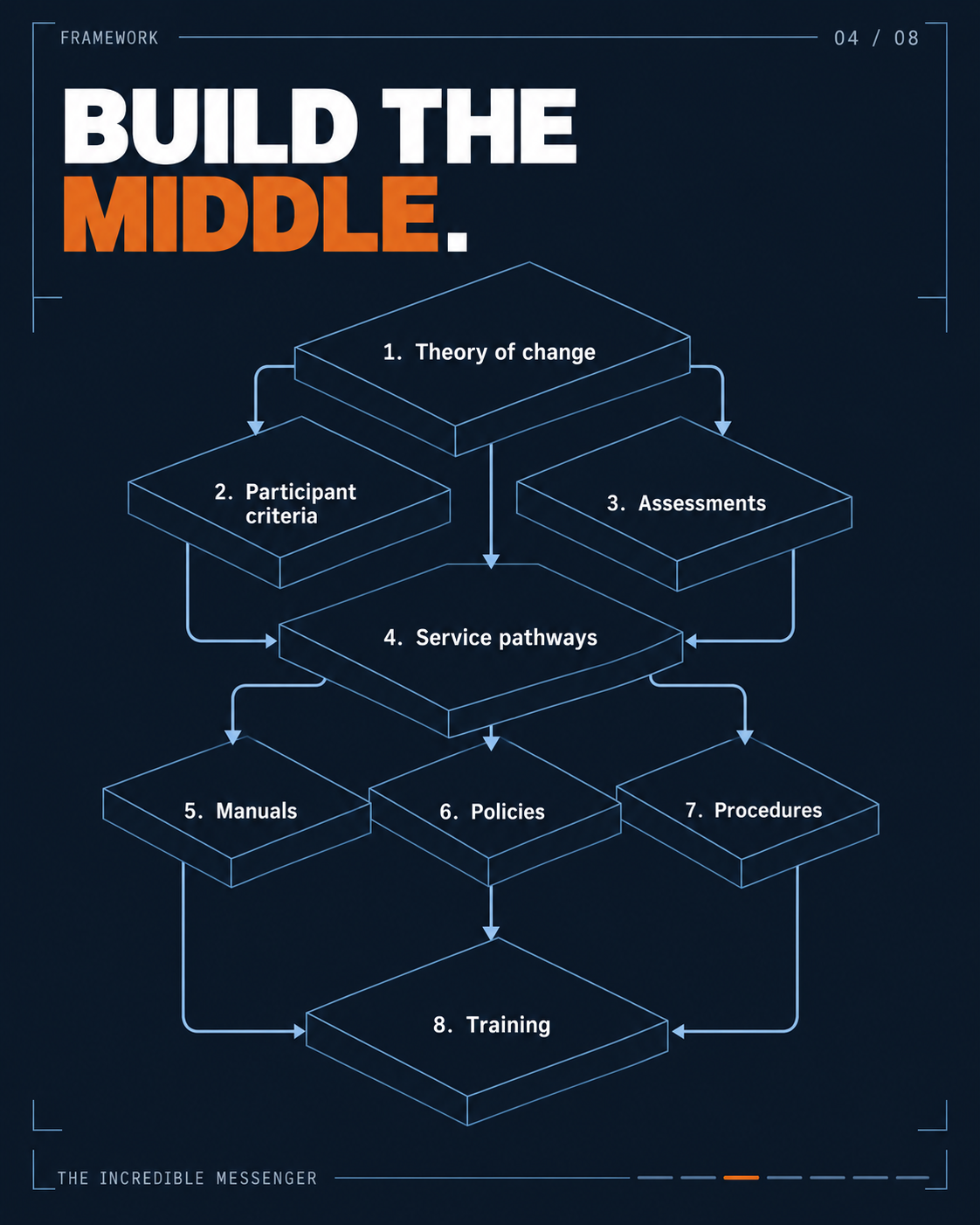
The operating structure that connects a program idea to everyday delivery.
View full-size graphic (opens in a new tab)Soren Tsui + Tristan Gross
Select a part of the visual to see what it does, how it can break down, and a next step to try. The examples are ICM guidance; the linked episode gives the guest’s explanation.
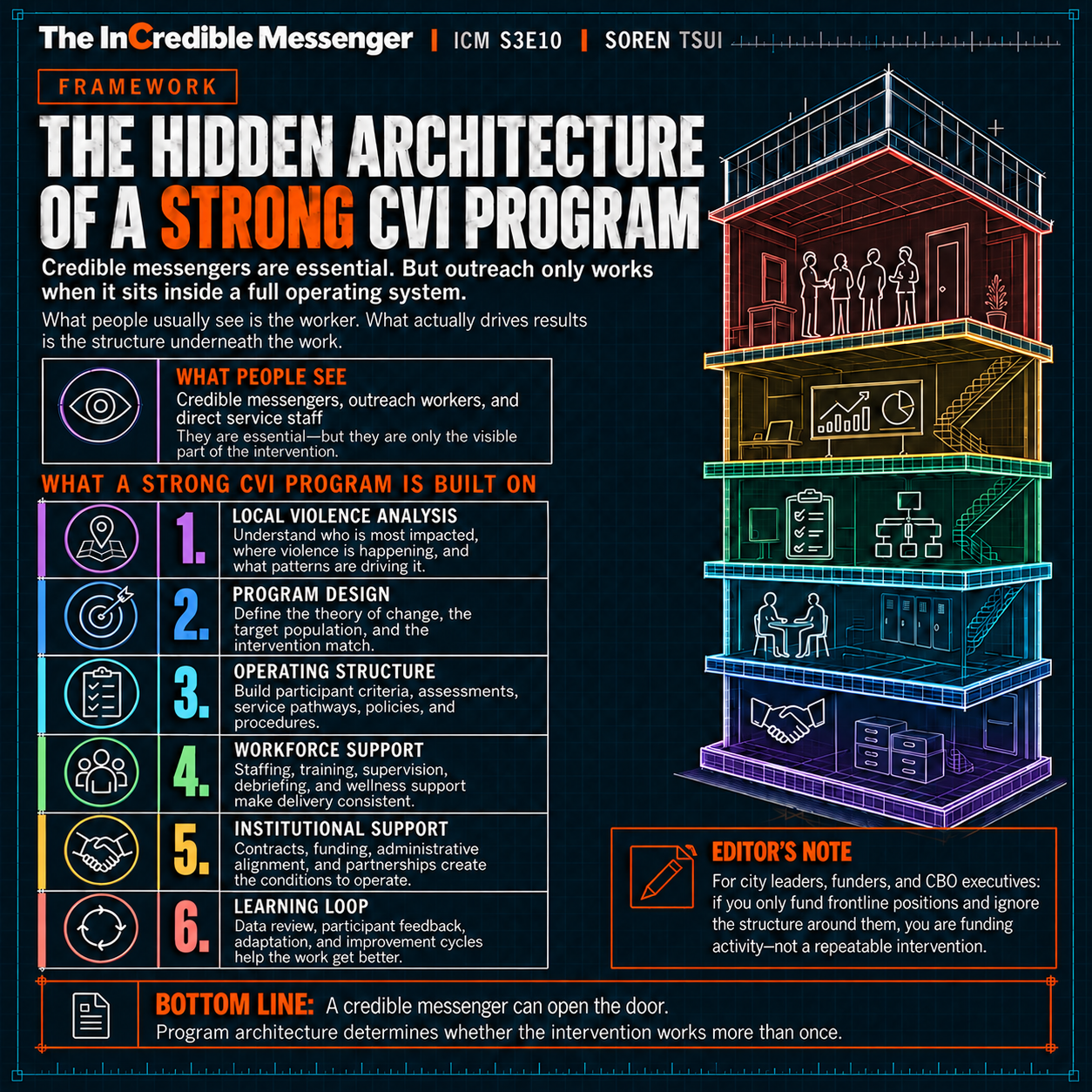
01 · Soren Tsui
A worker needs more than a job title: a clear picture of local violence, an approach that fits, instructions for the work, worker support, agency backing, and regular checks that lead to improvements.
Explore the visual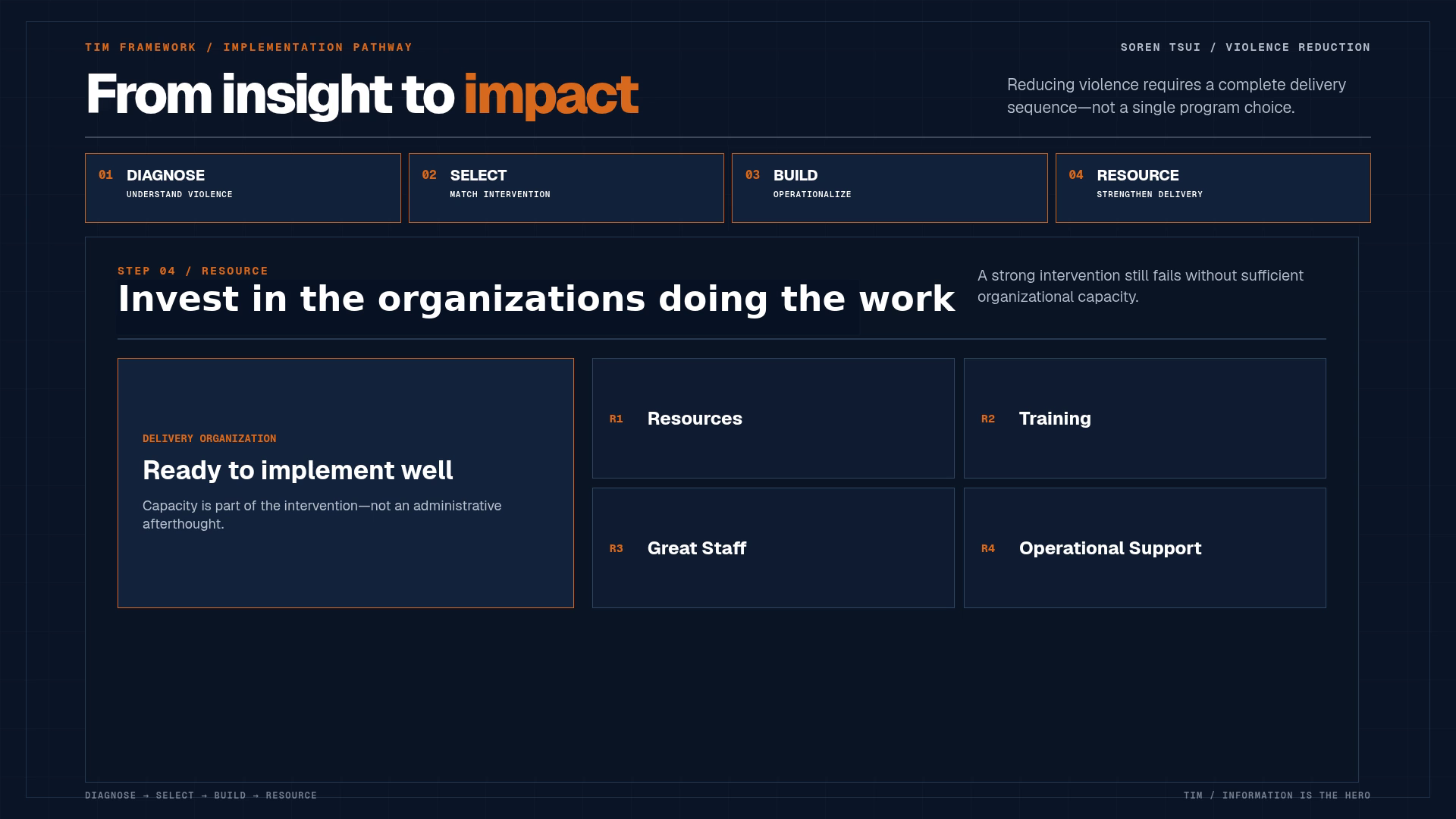
02 · Soren Tsui
The sequence moves through diagnosing the violence problem, selecting an intervention that fits, building the manuals and procedures to deliver it, and resourcing the organizations that do the work.
Explore the visual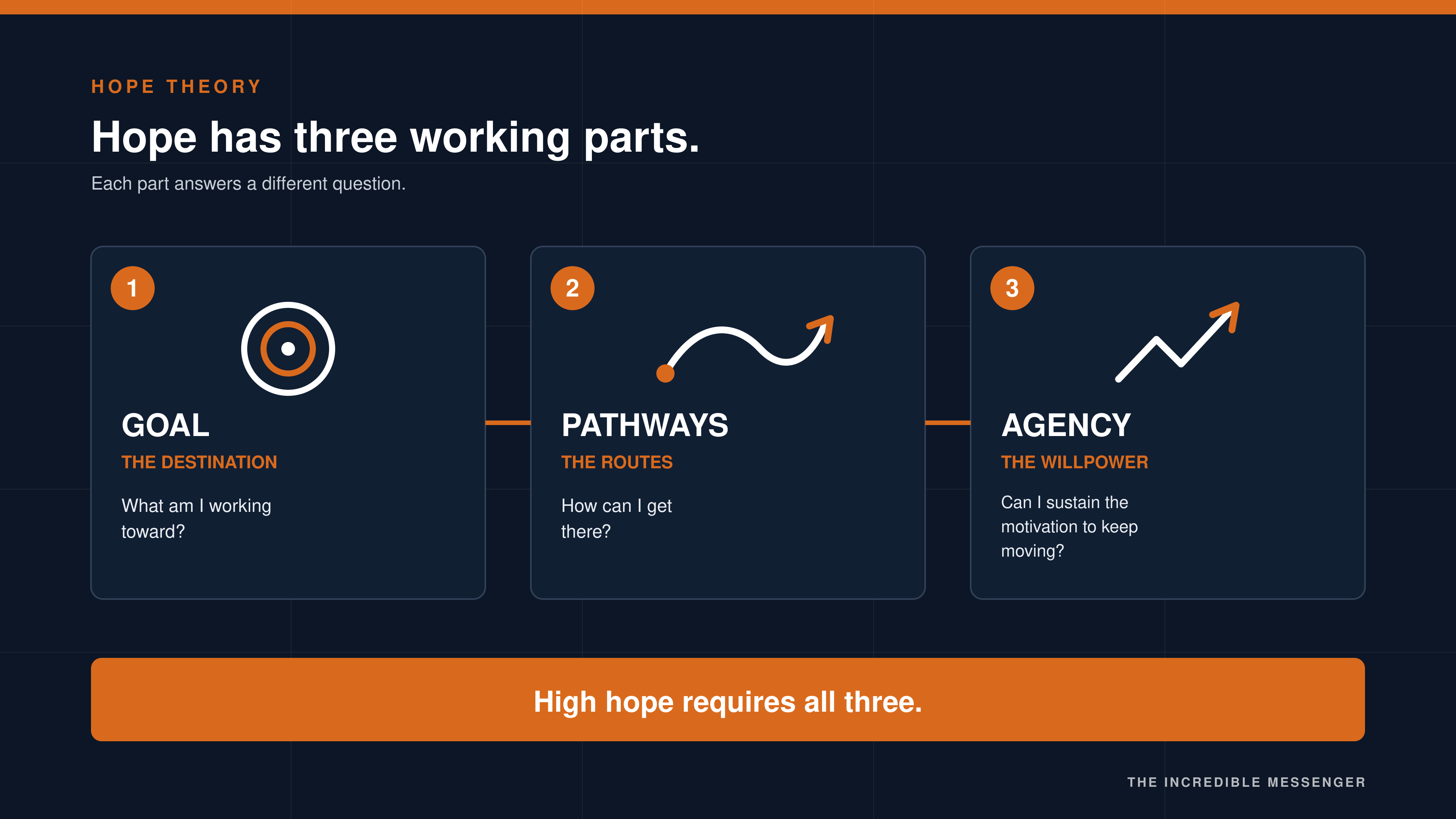
03 · Tristan Gross
The hope framework distinguishes a valued destination, possible routes toward it, and the agency to keep moving. If one part is blocked, a generic encouragement may miss the obstacle.
Explore the visual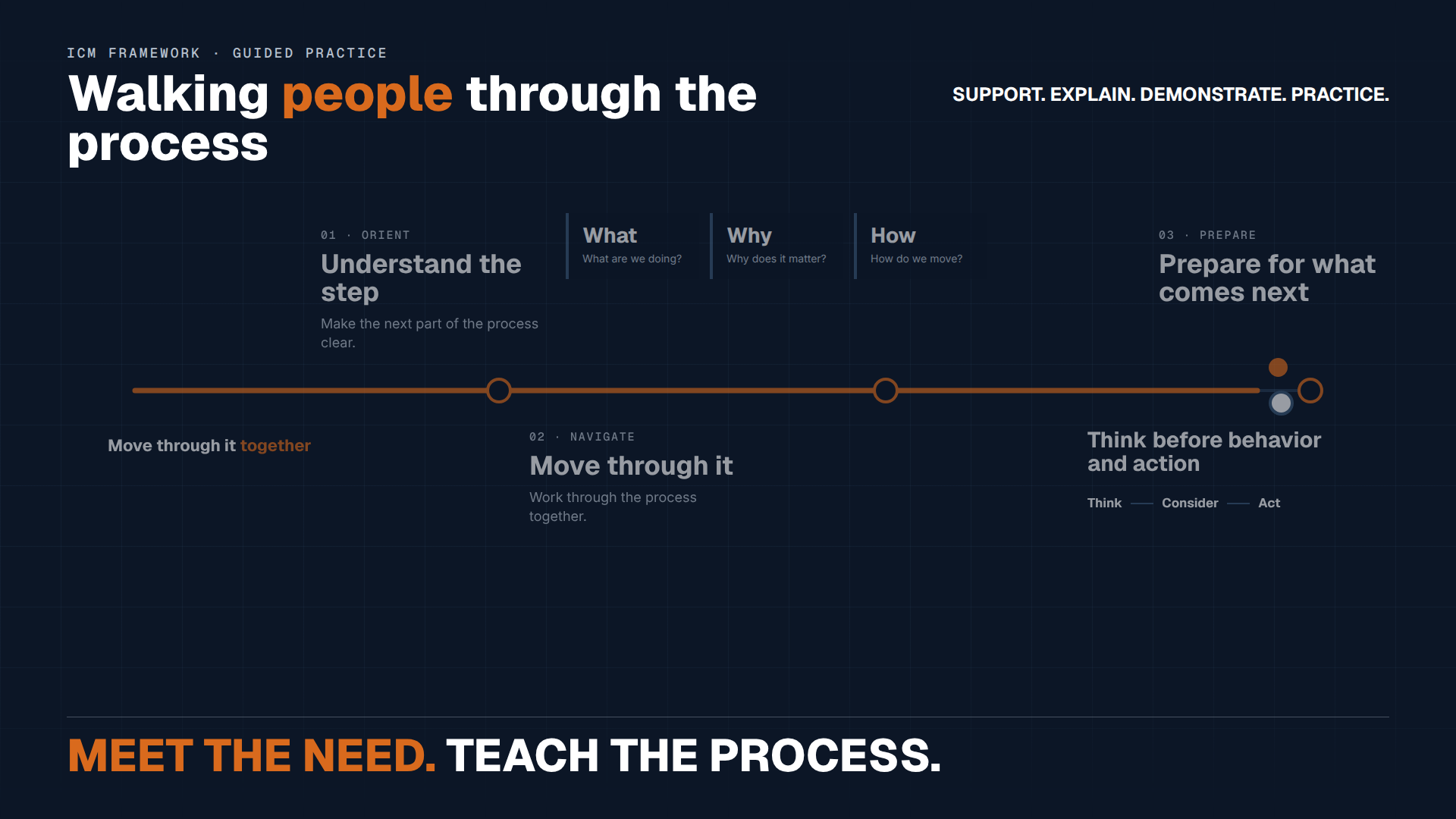
04 · Tristan Gross
Orient someone to what is happening and why, work through the process together, and prepare for the next step. Support, explanation, demonstration, and practice make a pathway usable.
Explore the visual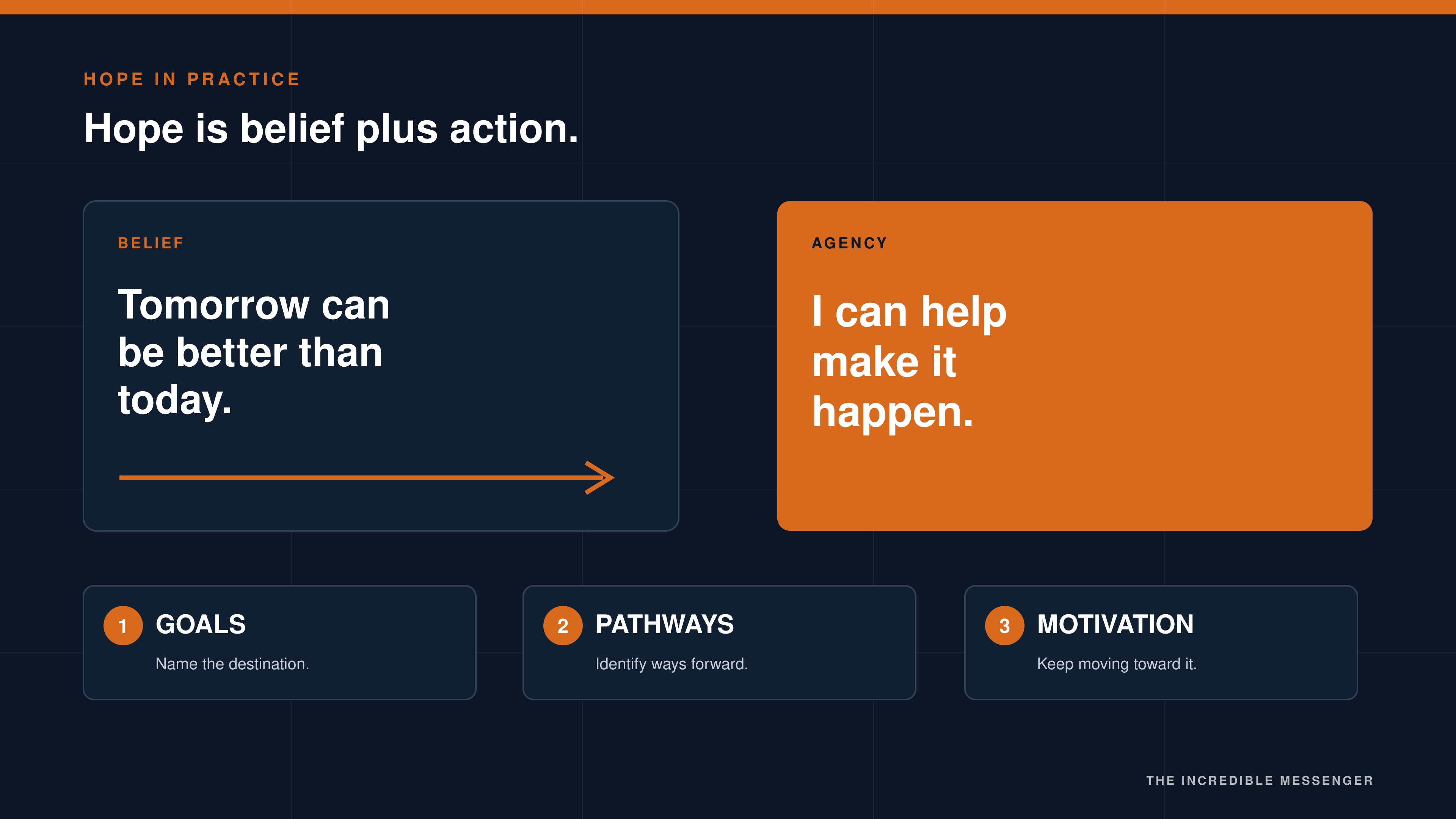
05 · Tristan Gross
The animation links a belief that tomorrow can be better with agency and practical action, then returns to goals, pathways, and motivation.
Explore the visual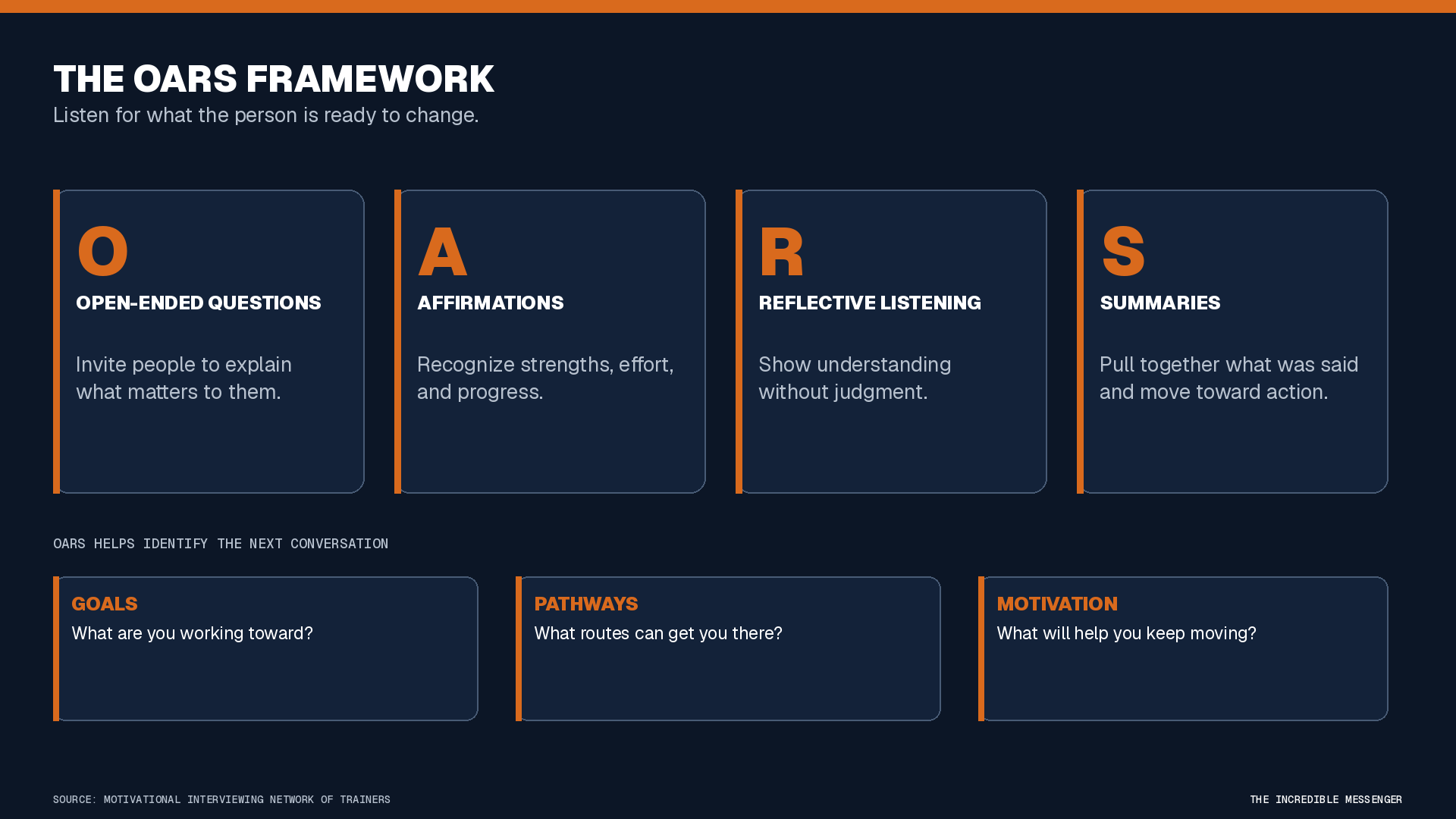
06 · Tristan Gross
Open questions, affirmations, reflective listening, and summaries support a collaborative conversation about change. They can surface goals, possible pathways, and motivation.
Explore the visual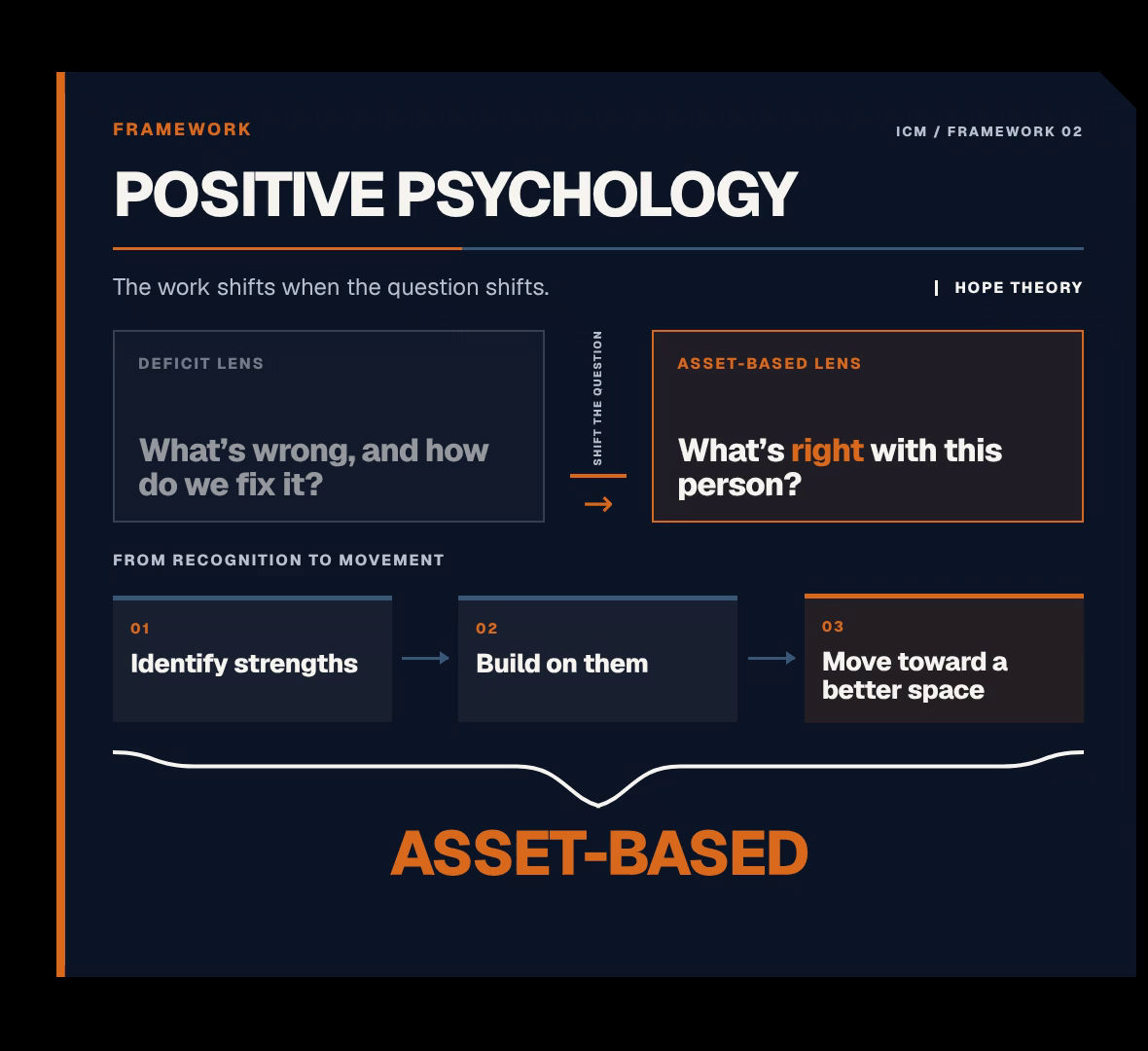
07 · Tristan Gross
Shift the opening question from only what is wrong to what strengths, relationships, and capacities the person can build on. The animation moves from recognition to a practical next step.
Explore the visual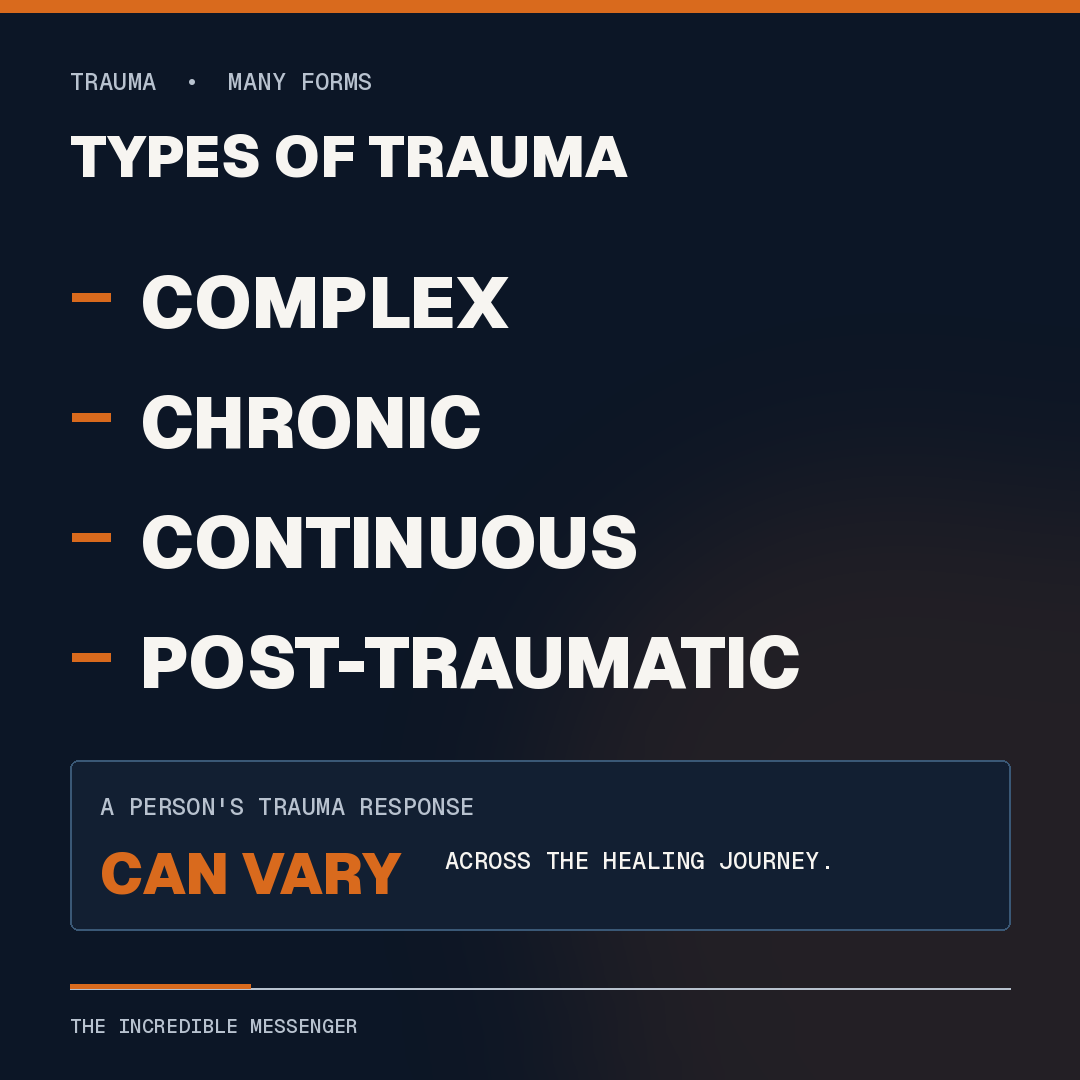
08 · Tristan Gross
The side panel names complex, chronic, continuous, and post-traumatic experiences and reminds practitioners that a person's response can vary across a healing journey.
Explore the visualICM frameworks
Connect the people, resources, and decisions that have to work together for safety.
Explore the conceptFind the conditions that shape several problems—and organize around what can change them.
Explore the conceptPair lived expertise with the training, standards, and support that make good work consistent.
Explore the conceptBuild the contracts, staffing, supervision, timelines, and decisions that make the strategy real.
Explore the conceptInvest in the trusted people, relationships, places, and local knowledge the system depends on.
Explore the concept