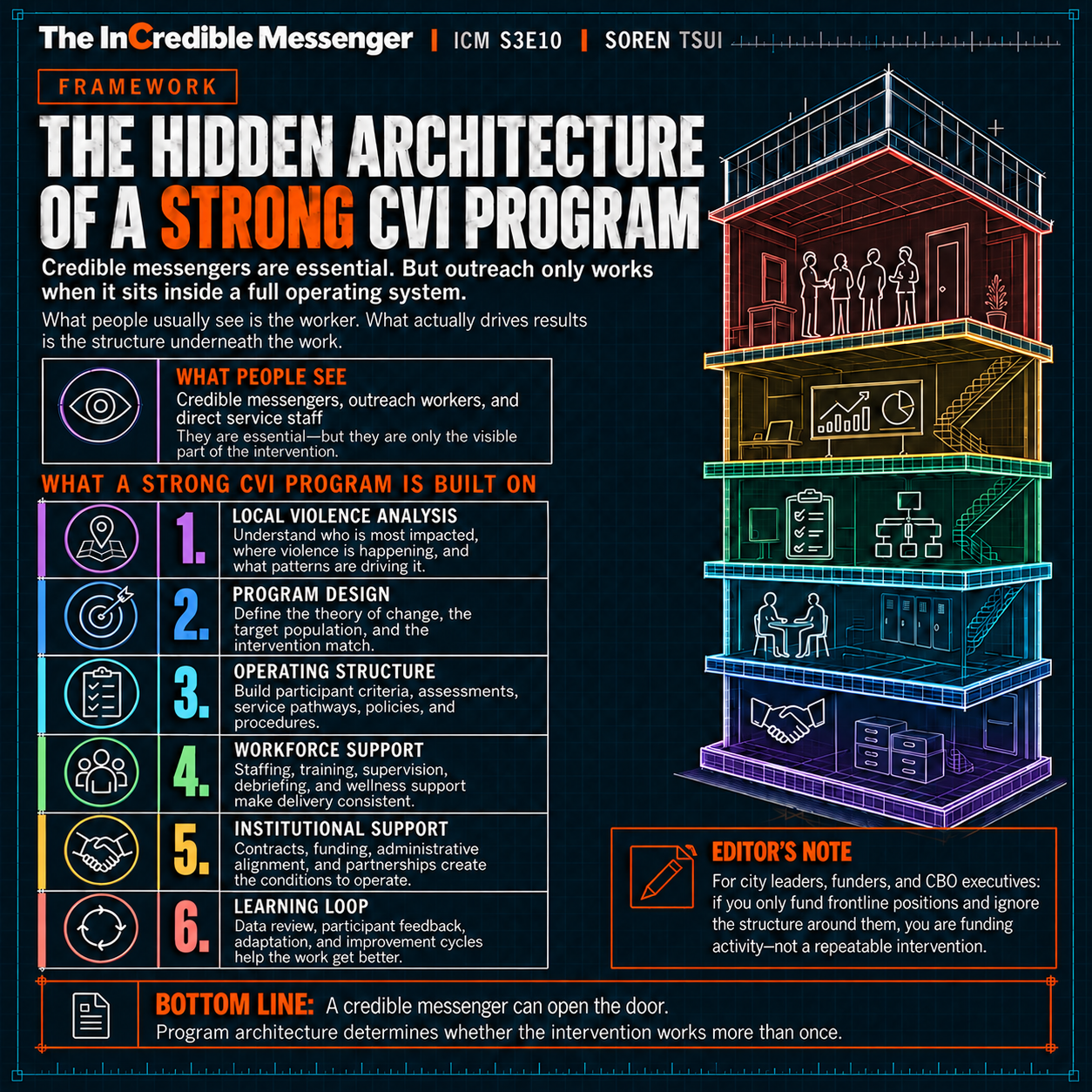
From the Soren Tsui episode: the structure supporting frontline community violence intervention.
View full-size graphic (opens in a new tab)↗Read graphic text
- Credible messengers are essential. Outreach works inside a full operating system; the visible worker is only part of the intervention.
- Local violence analysis: understand who is most impacted, where violence is happening, and what patterns drive it.
- Program design: define the theory of change, target population, and intervention match.
- Operating structure: build participant criteria, assessments, service pathways, policies, and procedures.
- Workforce support: staffing, training, supervision, debriefing, and wellness support make delivery consistent.
- Institutional support: contracts, funding, administrative alignment, and partnerships create the conditions to operate.
- Learning loop: data review, participant feedback, adaptation, and improvement cycles help the work get better.
- Funding frontline positions without supporting the surrounding structure funds activity without a repeatable intervention. A credible messenger can open the door; program architecture determines whether the intervention works more than once.