What this resource explains
A sound program cannot produce results when an essential step in delivery is missing or delayed. The Implementation Chain identifies each step that the strategy depends on.
Before services reach participants, the strategy must be supported by policy, funding, contracts, written procedures, staffing, training, supervision, data, and consistent daily practice.
Follow a proposed service from its authorizing decision to a real encounter. A city can announce funding in January while a contract, insurance review, staff recruitment, and training delay the first outreach until summer. Those are not administrative footnotes; they determine whether the intervention exists when people need it.
Write down the required steps, the owner of each step, the expected date, and the signal that it is complete. Then examine where work stops: a contract without cash flow, trained workers without supervision, referrals without available appointments, or reports without someone empowered to correct course. Fix the bottleneck and review whether service delivery changed before judging outcomes.
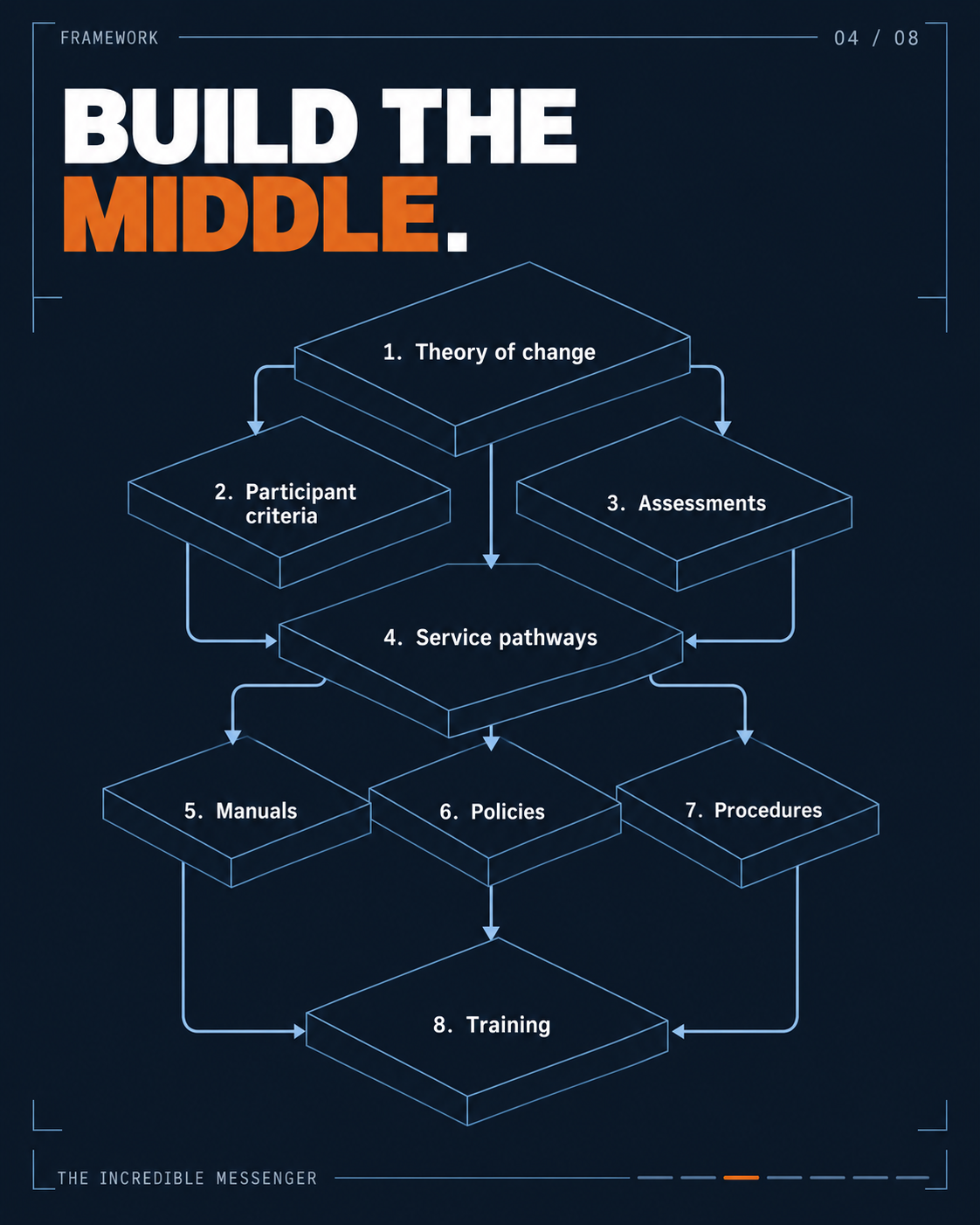
The operating structure that connects a program idea to everyday delivery.
View full-size graphic (opens in a new tab)Read graphic text
- A theory of change connects to participant criteria, assessments, and service pathways.
- Service pathways connect to manuals, policies, and procedures. These support training.
- The eight elements are: theory of change; participant criteria; assessments; service pathways; manuals; policies; procedures; training.
Work it through
Find the step that prevents delivery
Map one funded action from approval to a person actually receiving it. Ask administrative and frontline staff to check the same sequence.
What to leave with: A delivery chain with dates, owners, completion evidence, and a plan for the first bottleneck.
Who should receive what, when, at what frequency or intensity, and for how long?
List the approvals, contracts, cash flow, hires, training, supervision, referrals, and data steps in the order they must work.
Who owns each step? What record shows that it is complete rather than announced or merely funded?
Which step is late or weak? What support is needed now, and how will people be served safely while it is repaired?
When will you compare the service people actually received with the promise? Who can revise the plan?
Your entries stay in this browser tab. Copy them before you leave; this page does not save them.
This worksheet helps organize a decision. It does not replace a local assessment, safety and privacy protocols, legal review where needed, or implementation planning with the people affected.
Follow the question
From this idea to a local decision
Use the part you need next. A guest’s account, research finding, local pattern, and implementation plan answer different questions.
Understand the concept
Community Violence Intervention (CVI)
A set of community-centered approaches that engage people at high risk of violence and connect them with support.
Read the referenceCheck the evidence
Resource & Evidence
Define the type of harm and place, inspect the data, and check what research can and cannot establish.
Examine sourcesBring the right people together
Work with Jonathan
Get help turning this question into a local plan, training, or leadership decision.
Explore the engagement